
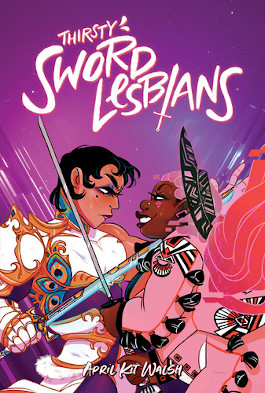
During my time away from the hobby, a lot happened. The biggest thing was obviously the release of D&D 5e, which pretty much rescued that game from the brink of obscurity that it had reached in the late 90s, early 2000s, when it had become passé, to say the least. Also in there, if I understand things properly, the very rules-light game Fudge was built upon to become the weirdly rules-heavy Fate. Alongside the rise of Fate came another game that seems to straddle rules-light and rules-heavy, Powered by the Apocalypse, which originally appeared in the game Apocalypse World, but which seemed to gain popularity in the game Dungeon World. That’s how I first came across it, with many people touting Dungeon World and its PbtA rules as a new, story-focused, rules light way of gaming. Getting past the fact that there were actually a lot of rules-lite and story-focused games in the 1990s, I found a lot to like in Dungeon World, but also a lot that left me scratching my head. Mostly, I didn’t know what it would look like at the table. I couldn’t quite understand how it would actually play. That remained true with other PotA games I read, as well as Forged in the Dark games, which have a lot of PotA in their DNA. If all of that left you confused, well, sorry. But also, I was confused. It brought me, finally, to reading Thirsty Sword Lesbians, and finally, FINALLY understanding how the game might actually work.
First, the elephant in the room. I’m a middle aged, straight man. I’m not the person to bring this game to the table. However, I’m glad a game made by and for the LGBTQ+ community is out there. I know it’s not the only game to specifically embrace that community, but it’s certainly one of the most bold and visible. Another thing that changed in my time away from the hobby was the far wider base of fans that has come to it. I think there’s always been a thread of radical acceptance in the gaming community, but it has existed alongside a thread of gatekeeping and pedantry. Suffice to say, I always wanted my gaming table to be welcoming to all, but I didn’t always know how to accomplish that. I still don’t. But I’m trying to learn. I bought this book in hopes that I could pick up some pointers. I’d also heard a few reviewers mention that it was one of the best presentations of the Powered by the Apocalypse engine. Success all around.
I’ve mentioned many times before that Fantasy is not my genre. I’ve read a bunch. I’ve certainly seen the movies. I like it just fine. But if I had to pick, it’s almost always going to be last in line. So, I haven’t read a lot of the “enemies to lovers” fiction that seems somewhat common in more romance-focused Fantasy. However, I believe it’s not so far from the classic Film Noir trope of the Sap and the Femme Fatale. That’s a story type I’ve always loved, and it’s something I’d like to bring to my games, but I’ve always felt a bit uncomfortable with it. I’m not super comfortable with roleplaying out a bunch of romance, love, lust, etc. at the table, even with people I know quite well. Definitely not with strangers. But, while horny bards are apparently a staple of D&D, and there have been people using romance as an element of their games for decades, I didn’t ever want to “make it weird” or be That Guy. There are, after all, so many horror stories about creepy players being creepy. What this game does is give you some mechanical structure to have the romantic storylines, without having to get awkward. It’s a bit more nuanced than “roll for seduction,” but made to be as abstract as the table feels comfortable with.
My first thought when reading this book was that it would be a marvelous way to run a Xena: Warrior Princess game. After all, not only was that show fairly horny in its early seasons, but it was also very gay. As time went on, they dropped the palpable sexual tension between Xena and Gabrielle, along with most of the other things that made the show enjoyable to watch. But those early seasons… As I continued to read, I started seeing opportunities for other games where relationships between player characters, as well as recurring NPCs and villains took center stage, instead of the epic quest and monster slaying. Thinking of other media, I jumped to Farscape, which I think would translate extremely well to this game. Again, while I don’t need to insert myself into the community this game was intended for, I can learn from it. In fact, it gave me plenty of ideas of how I might add certain elements to the Dungeon Crawl Classics game I’m hoping to run in the near-ish future (am I ever really going to get a regular, face-to-face game going again?).
As far as the rules go, this is definitely the clearest presentation of Powered by the Apocalypse that I’ve read so far. The biggest takeaway I had was that you can indeed run this game in a fairly rules-light way. Earlier games made it seem like anything you ever wanted your characters to do needed to be conceived of through “Moves.” That’s not the case at all. If anything, Moves end up functioning a lot like Skills in other games I’m used to. What seemed like a weirdly restrictive system, as written, is actually not all that different from other games I’ve played and run. The other main stumbling block I was running into was the game’s very core mechanic. You roll a couple six sided dice. If you roll a 2-6, you get a “down beat,” a 7-9 you get a “mixed beat,” and a 10+ you get an “up beat.” When I have seen this in other PotA games, it’s felt more harsh, more “pass/fail” and much more skewed toward failure. This may come from my own lack of understanding while reading, and the fact that I’ve not had a chance to actually play the game, but that’s been my reading. This time around, it seems easier to pass, because you can add some numbers to your roll. But also, it seems like the mixed and down beats are not quite as harsh as in other games that use the system.
One problem I’ve got with this game, and with most PotA games, is that I’m not the quickest draw. I’m not a great ad-lib kind of player, and it requires a good deal of quick on your feet improvisation. Now, that is a skill, and I used to be better at it when I gamed a lot more. I’m even seeing myself get better at it as I’ve been able to run and play more RPGs in the last few years. But it is a weakness of mine, and I think really always was. There are some suggestions of how you can pass some of that improv off to your players, and if you’ve got a group that’s all on the same page, that can work very well. I strongly suspect some of these Powered by the Apocalypse games would have been quite popular in my gaming circles back in the 90s.
Thirsty Sword Lesbians is setting agnostic. It’s not about a specific world or a specific genre. It’s about a certain style of storytelling. The stories this game means to tell are about love, romance, seduction, and conflict, while keeping things healthy and safe…and gay. As the back of the book says, “a sword fight can end in kissing.” I’m reminded of swashbuckling adventure stories where the villain and the hero have obvious sexual chemistry. Like Billy Zane and Catherine Zeta Jones in “The Phantom” (1996), or Taika Waititi and Rhys Darby in “Our Flag Means Death” (2022).
The artwork is not really my cup of tea, but it’s well done and very vibrant, giving the game a very distinct flavor. The writing by April Kit Walsh is clear, and again, the rules are explained quite well. The setting examples that are provided are something of a mixed bad. Some of them are pretty good and I think would make for a cool game. Some are somewhat half-baked. I would have liked at least one fully fleshed out scenario with totally table-ready character sheets (playbooks) ready to go. But even so, I think this is a nice addition to the library, and I’ll be consulting it again in the future, for sure.
If you like what I do, you can buy me a coffee. Check out my Facebook, YouTube, or Goodreads. And take a look at my Patreon page, where I’m working on a novel and developing a tabletop RPG setting. I’m proud to be an affiliate of DriveThru RPG. I’m an independent author. You can also read my fiction over on Amazon. A rating & review would make a world of difference. I now have an Amazon Wishlist.
 Matthew J. Constantine